
Reasons Why You Should Outsource Your Server Room
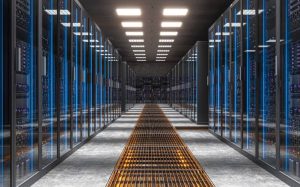 To run a business successfully, you need reliable infrastructure. Websites, cloud applications, databases, and digital communication are just some of the tools you use to communicate with clients and partners. Although running an in-house server room may look appealing at first glance, there might be quite a few drawbacks associated with this choice. In addition to high cost, you will also be responsible for maintenance and security issues. When the business expands, it is difficult to pay attention to your infrastructure. This might be a good reason to find a more convenient alternative.
Save on Infrastructure and Maintenance
A server room implies not only buying the servers but also racks, cooling system, backup power, network equipment, access control, security measures, and a proper facility. Electricity usage and equipment renewal increase expenses. By choosing server hosting Los Angeles, you will reduce the necessity to build and maintain infrastructure. Depending on the type of the service you choose, some aspects related to the facility can be performed by a specialist. Thus, you will be able to allocate resources where it is really necessary.
Increase Reliability and Power Protection
Servers require constant power supply, correct temperature, and good network connectivity. But office premises do not always meet all these criteria. Professional Los Angeles data centers are equipped with generators, uninterruptible power supplies, climate control, and redundant networks. However, actual reliability of the system depends on the quality of the facility design, its maintenance, and service level. For businesses that require permanent availability online, professional infrastructure might turn out to be a better solution compared to poorly equipped server rooms.
Secure Your Equipment and Manage Risks
An in-house server room may require additional investments in access controls, surveillance, environmental protection, and disaster prevention measures. In case you neglect these procedures, your equipment will be vulnerable to unauthorized access, overheating, power problems, and other operational risks. By choosing Los Angeles colocation, you will put your hardware into a facility which provides conditions for protecting and maintaining IT equipment. You will be responsible for server configuration, software updates, access restrictions, and backups.
Make It Easier to Expand Infrastructure
The development of the business might result in increased requirements to storage, processing power, bandwidth, and performance of the network. The extension of the in-house server room may imply finding extra space, electrical power, cooling system, and technical personnel. In case of colocation hosting Los Angeles, businesses can extend their infrastructure depending on available rack space, electricity, and the offers of the provider. You may want to try LA web hosting or managed hosting solutions if you prefer a different strategy.
Release Your IT Professionals to Work on Business Development
The maintenance of the server room implies continuous monitoring, troubleshooting, equipment replacement, and environment management. These tasks may limit the possibilities of your IT professionals to work on software development, strategy creation, and enhancement of the internal infrastructure. Using the services of a proper provider, you can decrease the responsibility of facility management and receive access to specialists, depending on the service agreement.
Find a More Convenient Hosting Alternative with Electric Kitten
Maintaining an in-house server room can be rather expensive and resource-consuming, especially when reliability, security, and scalability turn into the business priorities. Outsourcing the infrastructure to the professional facility can help you simplify the process and prepare for future growth. Electric Kitten can help businesses analyze the options of hosting and colocation. When choosing between LA colocation, LA data center, and Los Angeles web hosting, you should take into account service level, security measures, connectivity, and costs.